Plovdiv Medical Universities:
why Plovdiv Medical University in Bulgaria is a top choice to study medicine in Bulgaria,
Plovdiv is one of the most attractive student cities in Bulgaria, and it has become a major hub for medical universities that teach international cohorts in English. This article is worth reading because it turns confusing admissions language into a practical, 2026-focused guide to Plovdiv Medical University — covering entry steps, documents, exams, and what to check before you commit.
Medical universities in Plovdiv: what makes the city a hub?
Plovdiv offers a strong student environment and is often shortlisted by applicants comparing medical universities and universities in Bulgaria for English-taught medical education. For many foreign students, the draw is the combination of a large student community, lower living costs than some Western European cities, and direct access to Bulgarian clinical training settings.
When evaluating medical universities in Bulgaria, it helps to separate the “city advantages” from the “university advantages.” Plovdiv can be appealing, but the decisive factors should be the programme rules, the admissions process, and how the faculty and clinical base support training of medical and dental cohorts.
Plovdiv Medical University: what is MU – Plovdiv known for?
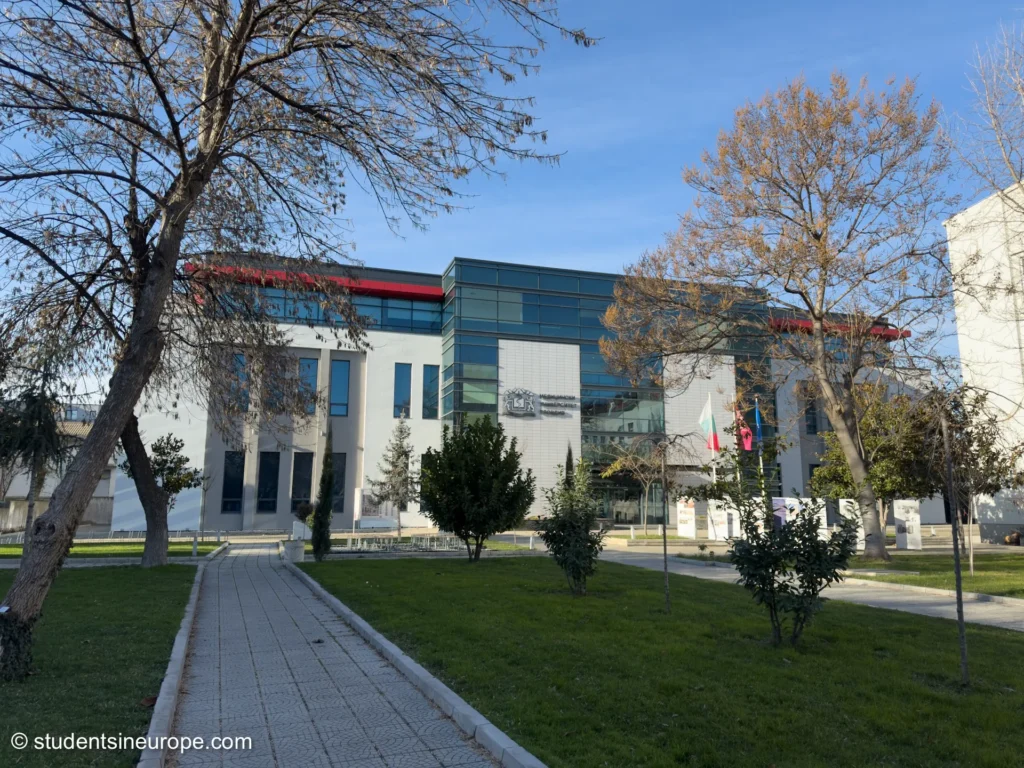
Plovdiv Medical University (often written as MU – Plovdiv) is one of the best-known medical universities for English-taught tracks in Bulgaria and attracts an international student body. For applicants who want medicine in Bulgaria without learning Bulgarian before day one, the “admission to English programmes” pathway is a major advantage.
In practice, students at Plovdiv Medical University usually care about three things: whether the entry requirements are achievable, whether the admissions office communicates clearly, and whether the faculty structure supports modern medical studies. The official admissions pages are the best source for those points because they list the exact rules and deadlines for 2026.
Medical University of Plovdiv programmes: Medicine, Dental Medicine, Pharmacy—what’s offered?
If the goal is to study medicine, MU – Plovdiv publishes a dedicated admission guide for English degree programmes and positions Medicine alongside other health tracks like dental medicine and pharmacy. This matters for candidates deciding between medicine and dentistry, because admissions preparation often overlaps (especially biology and chemistry), but the faculty environment and course emphasis can differ.
The university offers multiple English-taught specialties under the same admissions umbrella, which is convenient if a candidate wants to apply to more than one programme as a backup. MU – Plovdiv also states that applicants may apply for one or more specialties but can enrol in only one specialty, a detail that often affects strategy for medical university application planning.
Entry requirements (2026): what do you need before you apply?
The entry requirements for 2026 include having a secondary/high school diploma that gives access to higher education, plus subject preparation that aligns with the entry tests in biology and chemistry. MU‑Plovdiv also specifies that applicants should have attended Biology and Chemistry and have an average score of at least 62% of the maximum based on the grading system in the country of study, which is a concrete threshold many portals forget to mention.
Language is part of eligibility too: applicants for the English degree programmes should prove at least B1 English level (CEFR) using accepted certificates, prior English-medium education, or a diagnostic English language test administered during the campaign. For an international student who does not have IELTS/TOEFL ready, the diagnostic pathway can keep the plan realistic, but it still needs early scheduling and exam preparation.
Admission to Plovdiv Medical University: which documents are required?
For admission to Plovdiv Medical University, the official requirements list is detailed and document-heavy, which is typical across medical universities that accept international applicants. Required items include a registration form, diploma and transcript, and identity/citizenship documents, plus photos; importantly, MU‑Plovdiv also requires a Diploma Equivalency Certificate issued by a Regional Department of Education in Bulgaria for many cases involving schooling abroad.
Applicants who finished secondary education outside Bulgaria must follow recognition procedures and provide translated and legalized documents, and MU‑Plovdiv explicitly notes legalization/translation requirements under international treaties or the general procedure. This is one of the biggest “hidden workloads” when people decide to move to Bulgaria, because it can take time and depends on the country of origin.
Medical university application: how does the 2026 timeline work?
In 2026, MU‑Plovdiv states that documents are submitted to the Student Affairs Department within a defined window (from 4 March to 11 September 2026), and it provides multiple submission routes (in person, via authorized representative/company, or by post/courier). That flexibility helps foreign students who cannot travel to Plovdiv early, but it increases the need for careful scanning, file formatting, and tracking delivery.
MU‑Plovdiv also indicates that candidates who do not yet have all documents may still be allowed to take entrance exams and participate in ranking/enrolment, but missing documents must be submitted by the deadline or the applicant can be disqualified. This creates a two-track planning approach: prepare exams early, and run document legalization/recognition in parallel.
Tuition fee: how do English-taught places work at MU – Plovdiv?
MU‑Plovdiv explicitly frames admission to English degree programmes as being “solely on the basis of a paid tuition fee,” under relevant provisions of the Higher Education Act and via an agreement between the student and the university. In other words, the tuition fee mechanism is central to how places are allocated, but applicants still need to meet academic and language eligibility and complete the formal admission file.
The admissions guide also says the number of available places and the application and tuition fees are approved by the Academic Board. For anyone comparing medical universities, this is a reminder that the exact tuition fee and seat count can be set per academic year, so candidates should rely on the 2026/2027 official pages rather than third-party estimates.
Faculty and teaching: what does training look like for a medical student?
From an applicant perspective, “faculty” is more than a label: it usually signals how the programme is organized, who teaches, and what academic resources (like laboratory learning) shape early training. Even when the admissions pages focus on entry logistics, they still hint at academic structure by linking admissions to specific specialties and entry testing aligned with biology and chemistry foundations.
For medical and dental students, the best way to judge day-to-day academic reality is to match entry expectations to the later workload: strong biology and chemistry preparation typically correlates with smoother first-year progress in medical school. Before choosing Plovdiv Medical University, it helps to check whether the university campus setup, teaching schedule, and practical components fit personal learning style and budget for living in Plovdiv.
Accreditation and recognition: how to check legitimacy for medicine in Bulgaria?
When people search “accreditation,” they often mix up academic accreditation, professional recognition, and immigration/visa paperwork. A practical approach is to start from the official Bulgarian university admissions rules (because they show the institution operates under national higher education legislation) and then confirm recognition requirements in the country where the graduate wants to practice.
For medicine in Bulgaria, it’s also important to differentiate between university-level legitimacy and programme-level requirements (like equivalency certificates and legalized diplomas). MU‑Plovdiv’s insistence on formal recognition/equivalency and legalized documents is a sign the university aligns admissions with regulated Bulgarian processes rather than informal enrollment.
University ranking and outcomes: what should applicants look at beyond marketing?
A “university ranking” can be a starting point, but it rarely tells the full story for medical studies—especially across different countries and licensing systems. For medicine and dentistry pathways, applicants should weigh: entry requirements realism, exam transparency, document processing reliability, and the total cost (tuition fee plus living expenses in Plovdiv).
When comparing medical universities, the most reliable signals are the official admission rules (deadlines, language proof options, document checklists) and whether the programme structure matches the candidate’s long-term plan (internship/clinical training and post‑graduation recognition). This is also why third-party portals can help with orientation, but the “source of truth” should be MU‑Plovdiv’s 2026 admissions pages.
• Focus on official requirements first: B1 English proof options and the Biology/Chemistry academic background threshold matter in 2026.
• Start document legalization/translation and equivalency early, especially if you finished school abroad.
• Use the full 2026 submission window strategically (exams + documents in parallel), and don’t miss the final deadline.
• Treat tuition fee details as year-specific and confirm them on the official English-programme admissions pages.
• Choose among medical universities based on admissions clarity, practical training fit, and your plan after graduation — not on marketing alone.